
Choose a format that fits your experience
Track-day formats vary. Some events group drivers by pace or experience; others use instructed sessions, open pit lane, timed slots or a specific vehicle category. The organiser’s briefing and rules define the format. Read them before booking or travelling. Check licence requirements, noise limits, permitted vehicles, insurance terms, passenger rules, overtaking policy and cancellation conditions.
Structured sessions can help a new participant understand the routine and take breaks between runs. Open pit lane may offer flexibility but demands careful self-management. Neither is automatically safer or more suitable for everyone. Ask the organiser what supervision and instruction are provided. Do not infer that a road-legal car or standard insurance covers circuit use.
Prepare the vehicle methodically
Follow the vehicle manufacturer’s maintenance guidance and any event-specific technical requirements. Check that the car is in sound condition before travel. Pay attention to tyres, brakes, wheel fasteners, fluid levels and visible leaks. A track environment places different demands on a vehicle than ordinary commuting. If you are unsure about a component, seek inspection from a qualified technician rather than relying on a quick visual guess.
Tyres
Inspect tyres for damage, wear and suitability. Confirm pressure requirements with the vehicle maker or a qualified specialist and follow the event’s guidance. Tyre pressures can change with use and temperature; do not copy someone else’s setting. Check whether the organiser has rules on tyre type or condition.
Brakes and fluids
Brakes need particular attention. Ask a competent workshop to assess pads, discs and brake fluid if condition or service history is uncertain. Look for warning signs and never continue if braking performance changes. Confirm fluid levels and check for leaks before and after sessions. Use manufacturer guidance for fluids and maintenance rather than treating a track-day checklist as a substitute for professional servicing.
Cooling and load
Repeated circuit use can produce heat. Remove loose items from the cabin and boot. Check that cooling systems are maintained and that the vehicle has no warning lights. Let the car cool as advised by its manufacturer and event staff. Do not open a hot coolant system. Stop safely and seek assistance if a temperature warning or mechanical issue appears.
Driver readiness and equipment
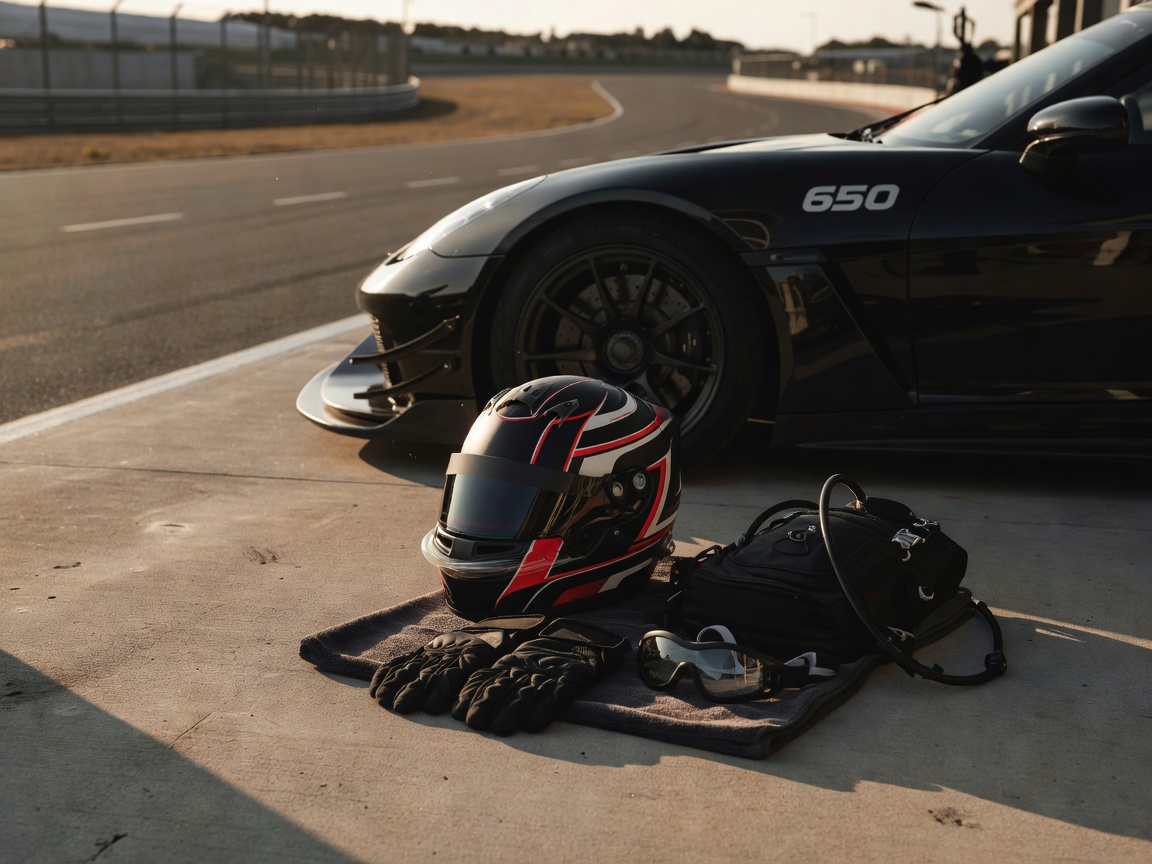
Check the organiser’s requirements for helmets, clothing, footwear and any other protective equipment. Standards may depend on vehicle, event type and governing rules. A helmet that looks suitable is not automatically compliant. Confirm fit, condition, approval and use instructions with the supplier or organiser. Secure long hair and remove loose accessories where required.
Arrive rested, hydrated and ready to listen. The briefing explains flags, pit-lane procedure, track entry and exit, passing rules, incident response and stopping locations. Ask questions before the first session. If you feel unwell, tired or distracted, do not drive. Learning the circuit gradually is more useful than chasing a pace. Follow the organiser’s instructions and keep predictable awareness of other participants.
Pit-lane conduct and session planning
The pit lane is a controlled working area. Follow posted speed limits, line markings, marshal directions and queue procedures. Keep children and unauthorised visitors out of restricted areas. Wait for a clear release before entering the circuit. On track, respect passing rules and flags. Do not stop for photographs, block a route or attempt to help at an incident unless instructed by event staff.
Build breaks into the day. Check the vehicle after sessions for leaks, damage, unusual noise or warning lights. Take time to cool down and reset before driving again. Track sessions are not public-road practice. A circuit’s controlled environment, emergency response and rules do not transfer to ordinary roads, where speed limits, traffic, pedestrians and road conditions require lawful, cautious driving.
Advantages, limits and selection
An organised closed-circuit day offers a defined environment and event rules, and may include briefings or instruction. It still carries physical, mechanical and financial risks. Participation does not guarantee coaching, open access or a particular number of sessions. Compare format, supervision, eligibility, safety processes, insurance exclusions, vehicle requirements and cancellation policy before committing.
Choose an event that allows enough support for your experience. New participants may prefer a structured introduction and clear instructor availability. Experienced drivers should still review current rules and maintain a conservative margin. Never use a public road to test equipment, practise racing lines or imitate circuit behaviour.
Good for
- Drivers seeking an authorised, organised closed-circuit experience.
- Participants who want to learn about vehicle preparation in a supervised environment.
- People comfortable following formal briefings, flags and event procedures.
What to know
- Event formats, equipment standards and eligibility are not universal.
- Road insurance may exclude circuit activity. Read the policy and event terms.
- Vehicle maintenance and protective equipment require qualified, applicable advice.
- Closed-circuit activity never justifies speeding or racing on public roads.
Practical checklist
- Confirm event format, eligibility, rules, safety briefing and insurance position.
- Arrange a qualified vehicle inspection if condition is uncertain.
- Check tyres, brakes, fluids and warning indicators before departure.
- Verify helmet and protective-equipment requirements with the organiser.
- Bring documents, water, suitable clothing and a plan for rest between sessions.
- Stop and report any mechanical issue or change in driver readiness.